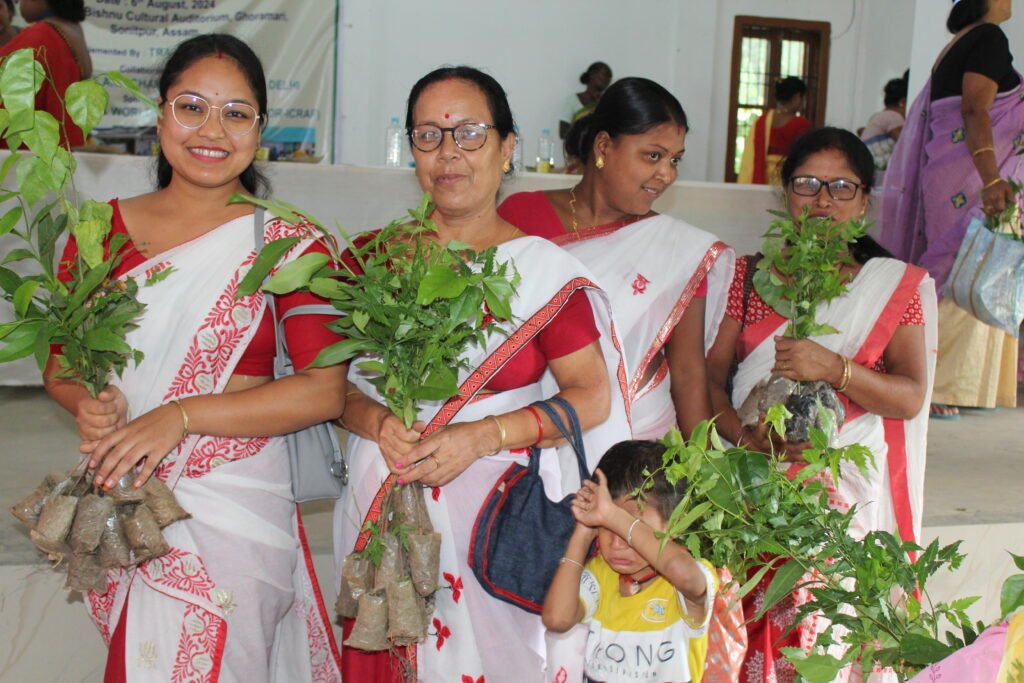
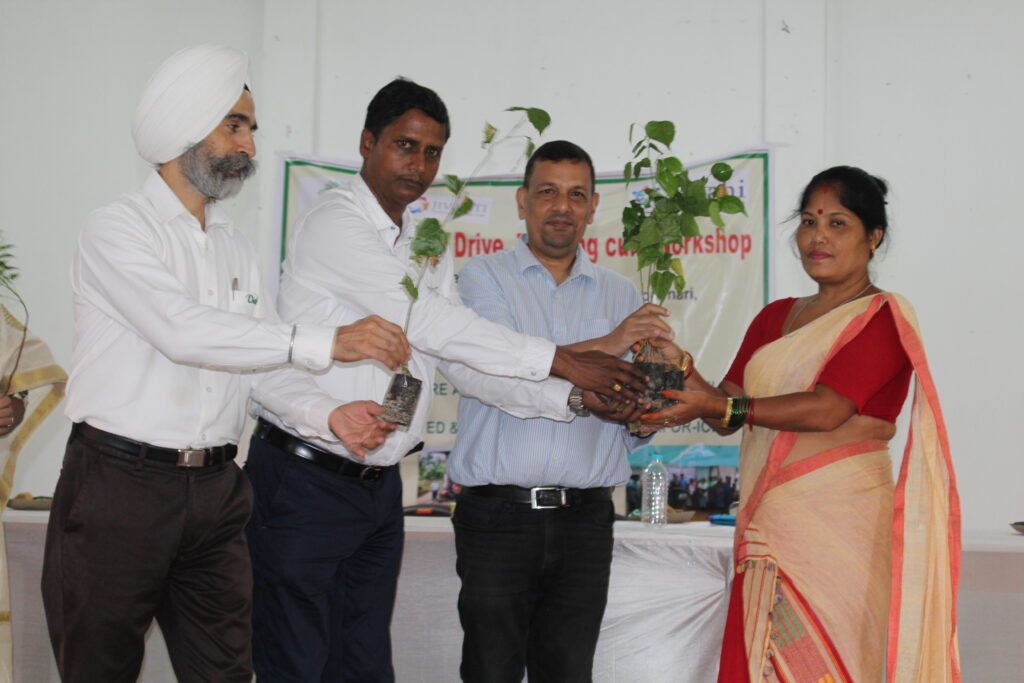
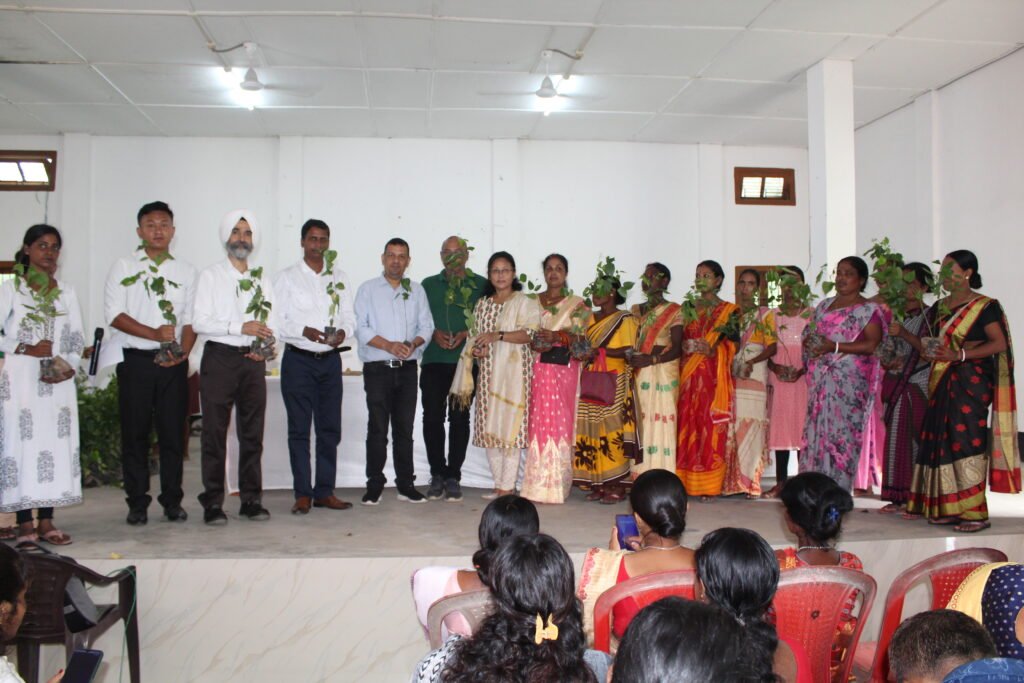
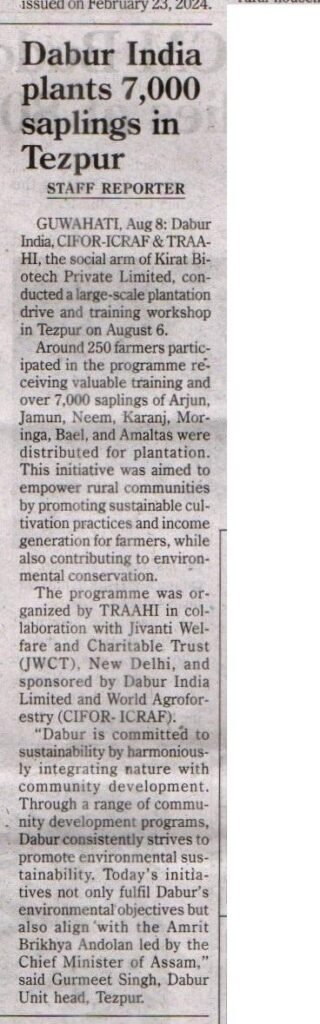
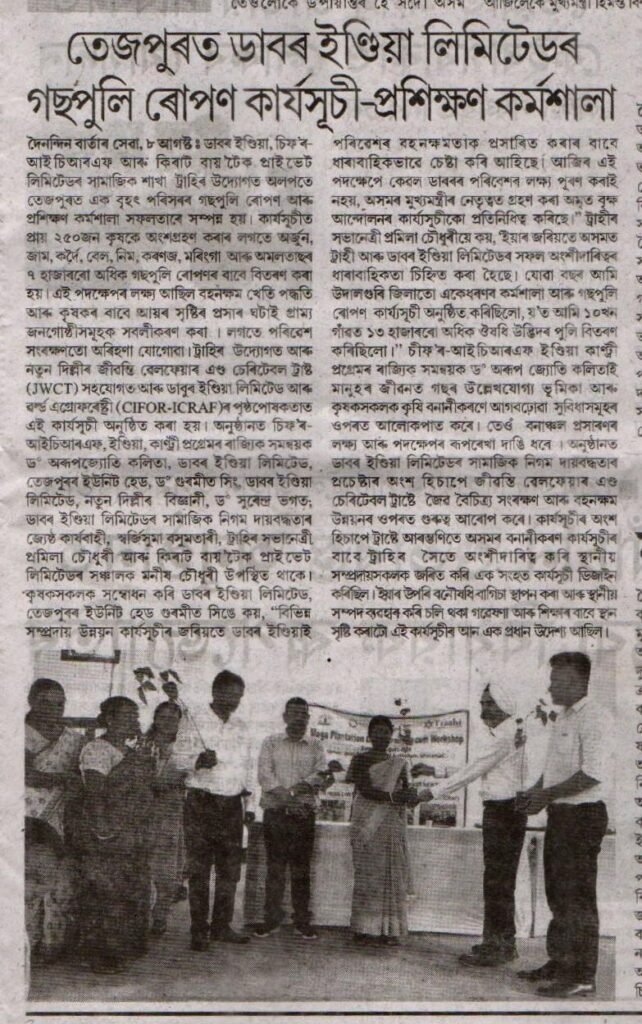
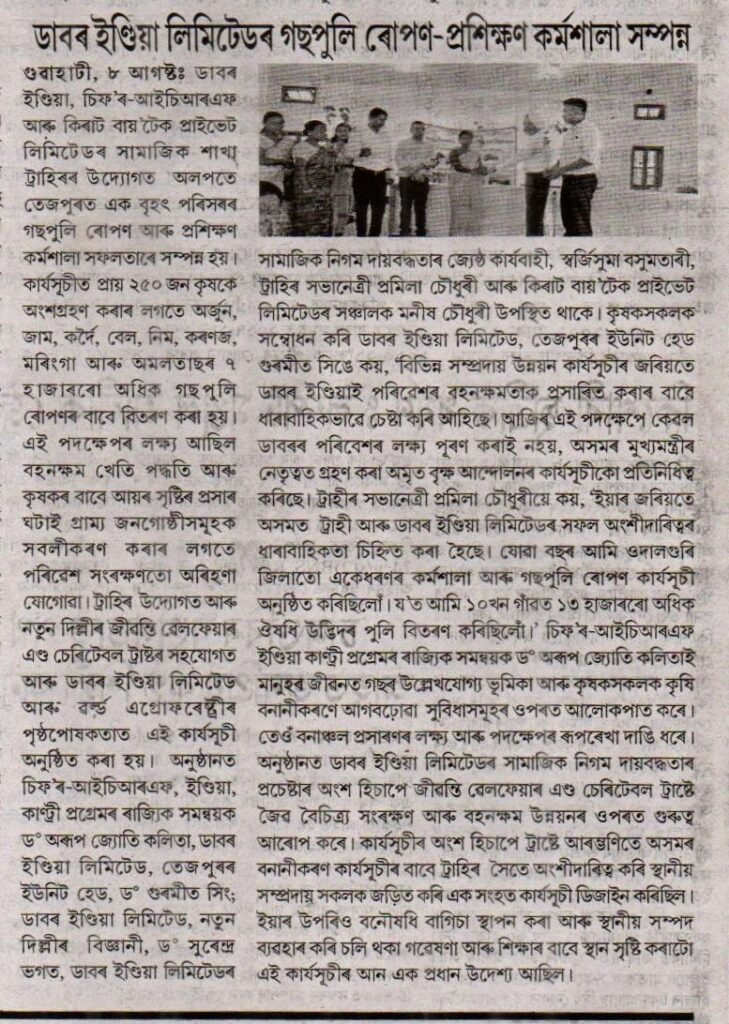
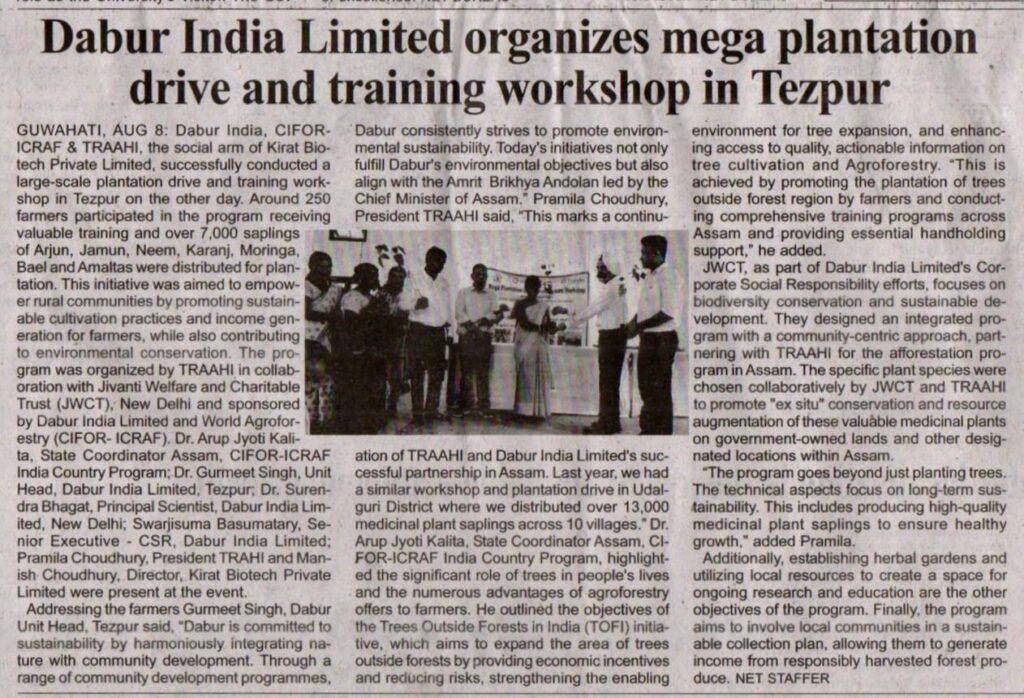
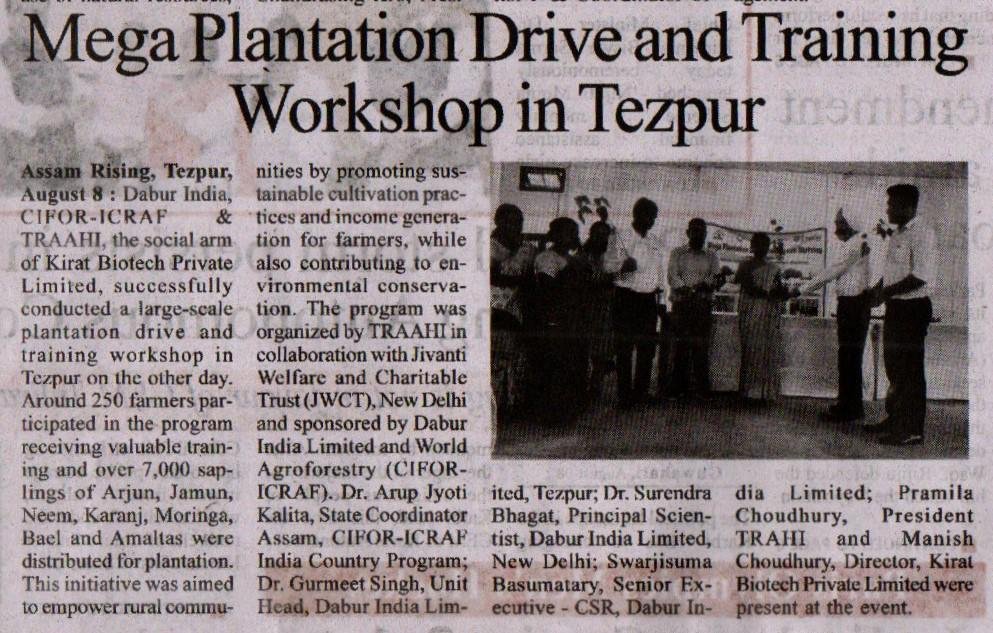
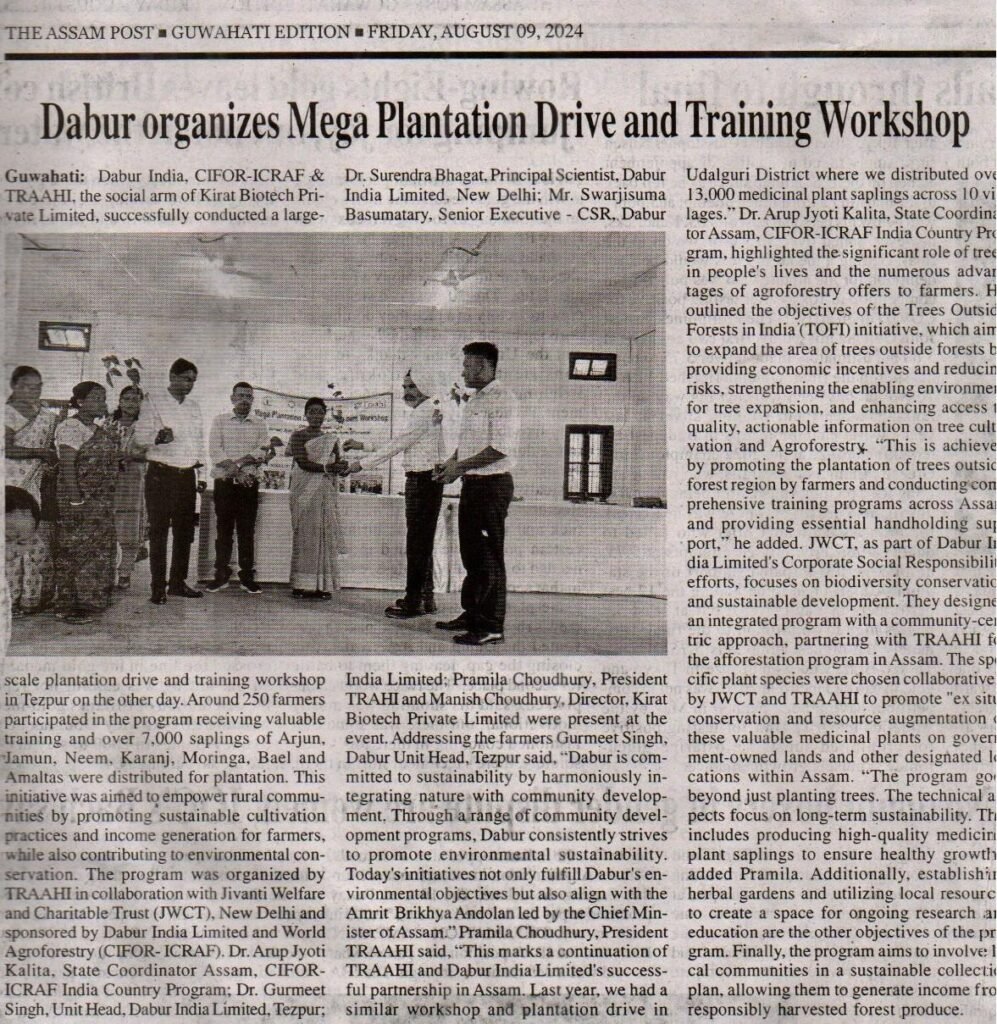
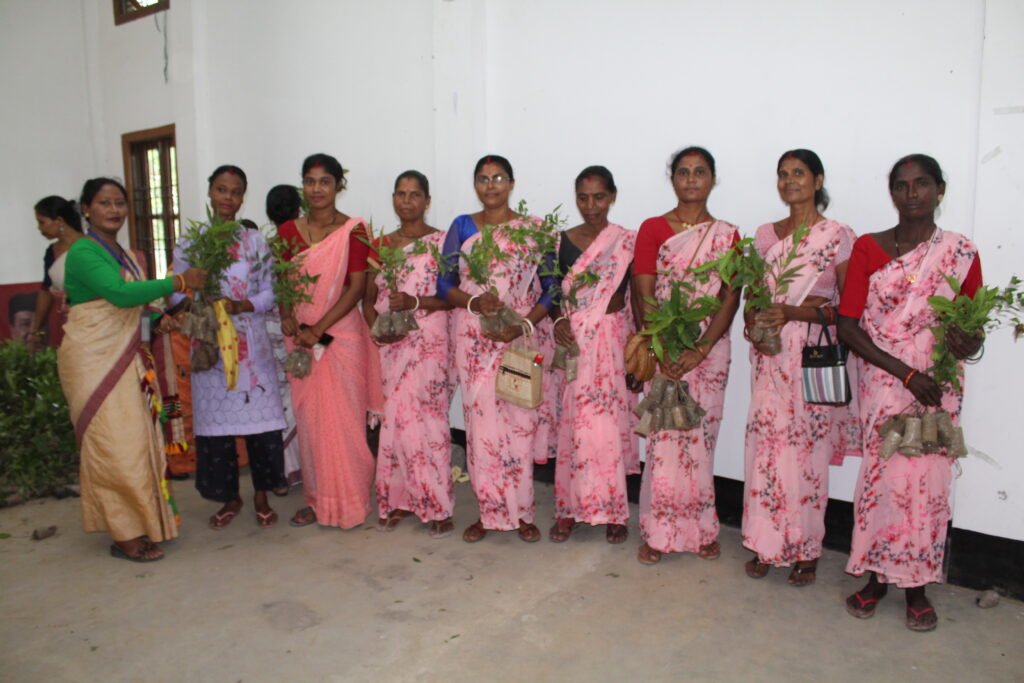
On August 6, 2024, Tezpur in Assam’s Sonitpur District became the site of a significant event aimed at empowering local farmers and promoting environmental conservation. Organized by TRAAHI, the social arm of Kirat Biotech Private Limited, in collaboration with Dabur India and CIFOR-ICRAF, the event saw the participation of 250 farmers who were trained in sustainable cultivation practices and received over 7,000 saplings for plantation.
Kirat Biotech at the Heart of Sustainable Development
Kirat Biotech, through its TRAAHI initiative, played a pivotal role in this event, reinforcing its commitment to sustainable development in Northeast India. The saplings distributed—Arjun, Jamun, Neem, Karanj, Moringa, Bael, and Amaltas—were carefully selected to promote biodiversity and provide economic benefits to the farmers. This initiative is part of TRAAHI’s broader mission to empower rural communities by generating income through sustainable agriculture while contributing to environmental preservation.
Pramila Choudhury, President of TRAAHI and Director of Kirat Biotech, emphasized the significance of this event as a continuation of the successful partnership between TRAAHI and Dabur India. She highlighted last year’s similar drive in Udalguri District, where over 13,000 medicinal plant saplings were distributed, underscoring the ongoing commitment to sustainable growth and community empowerment.
Collaboration for a Greener Future
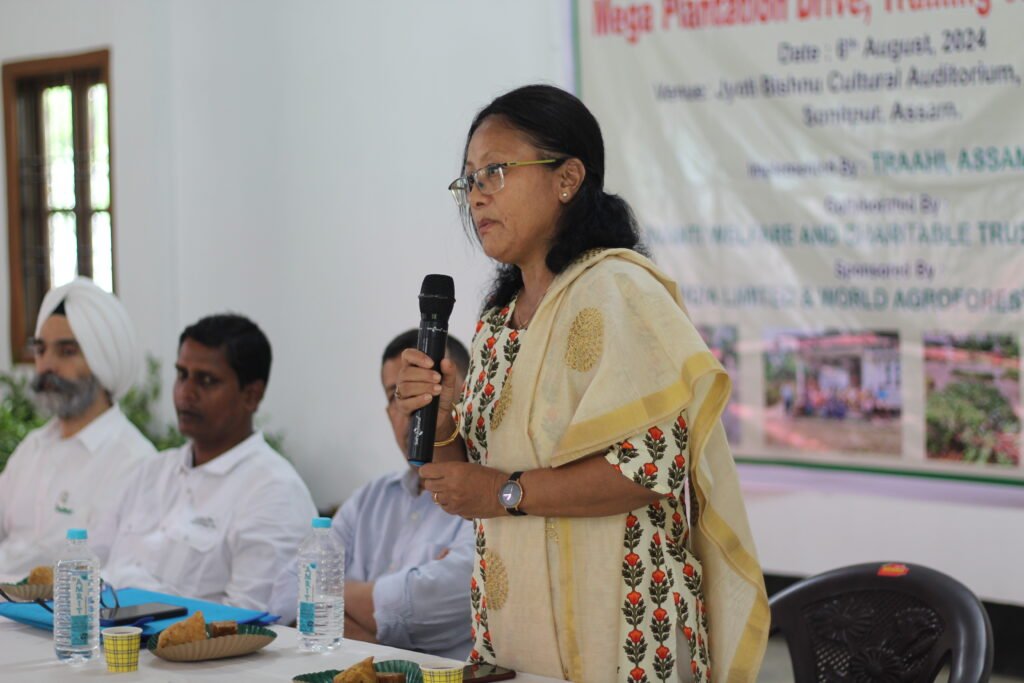
The event was not just about planting trees—it was about creating a sustainable future. Experts from CIFOR-ICRAF, including Dr. Arup Jyoti Kalita, spoke about the critical role of trees in enhancing agroforestry and the importance of expanding tree cultivation outside of forests. Dr. Kalita also discussed the Trees Outside Forests in India (TOFI) initiative, which aims to provide economic incentives and reduce risks for farmers, thereby strengthening the enabling environment for tree expansion in Assam.
Dabur India’s representatives, including Dr. Gurmeet Singh, also reiterated their commitment to sustainability, aligning their efforts with Assam’s Amrit Brikhya Andolan initiative. By partnering with TRAAHI and JWCT, Dabur continues to promote environmental sustainability through community-driven programs.

Beyond Planting: Long-Term Sustainability and Community Empowerment
TRAAHI’s approach goes beyond mere tree planting. The program is designed with a focus on long-term sustainability, ensuring the production of high-quality medicinal plant saplings that contribute to the health and prosperity of the community. By establishing herbal gardens and utilizing local resources, TRAAHI is creating spaces for ongoing research and education, further empowering local communities.
The initiative also includes a sustainable collection plan, allowing farmers to generate income from responsibly harvested forest produce. This holistic approach not only protects the environment but also builds a foundation for a prosperous and sustainable future for the rural communities involved.
About Kirat Biotech and TRAAHI
Kirat Biotech Private Limited, based in Guwahati, Assam, is dedicated to the sustainable cultivation of medicinal and aromatic plants native to the region. Operating across Assam, Nagaland, Arunachal Pradesh, Manipur, and Tripura, Kirat Biotech is committed to conserving the region’s rich biodiversity and supporting local economies through the supply of herbal raw materials to various industries.
TRAAHI, Kirat Biotech’s social arm, focuses on sustainable development initiatives that empower rural communities by generating income, protecting the environment, and promoting sustainable agricultural practices.
Through events like the plantation drive in Tezpur, Kirat Biotech and TRAAHI continue to make a lasting impact on both the environment and the livelihoods of farmers across Northeast India.